 Web Development
 APP Development
 CRM Development
 Digital Transformation
 Generative AI
 QA Testing & Automation
A client asked me last month why he should pay a consultant to tell him what’s wrong with his network when his IT guy already handles updates. Fair question. Here’s the honest answer: an IT provider keeps the lights on. Cybersecurity consulting is the process of someone actively trying to break into your systems, on purpose, before a criminal does it for real.
That distinction gets lost constantly, and it’s costing businesses money they didn’t need to lose. Nearly half of small companies still budget zero dollars for security review, yet a tested response plan alone can save over $232,000 compared to scrambling after an attack, based on figures pulled together by StationX. Prevention is cheap. Cleanup never is.
I’ve sat in on enough of these engagements now to know where businesses actually get burned. Not from exotic hacking. From basics nobody checked. So let’s go through what cybersecurity consulting really covers, how to pick someone who won’t waste your time, and the specific signs that mean you’re already behind.
What Cybersecurity Consulting Actually Covers
Cybersecurity consulting means bringing in a specialist whose entire job is finding the gap before someone else does. Not patching printers. Not resetting passwords. Finding the door you forgot was unlocked.
Here’s something most articles on this topic skip entirely: a good cybersecurity consultant will often tell you what NOT to fix yet, ranked against what actually poses risk right now versus what can wait six months. Cheaper firms hand you a fifty-page report with everything flagged red. That’s not useful. It’s noise dressed up as thoroughness.
The market backs up how seriously businesses are starting to take this. Global spending on cybersecurity consulting is projected to reach $37.5 billion by 2035, growing close to 9% annually according to Business Research Insights. That’s not hype cycle money. That’s businesses that got burned once and aren’t doing it twice.
What’s Actually Included in Cybersecurity Consulting Services
Every cybersecurity consulting firm packages things a little differently, but strip away the marketing language and most engagements boil down to five things.
| Service | Real-World Translation |
| Risk assessment | Where can someone actually get in |
| Compliance review | What law are you accidentally breaking |
| Incident response plan | What happens the morning after a breach |
| Employee training | Stopping the click before it happens |
| Cloud security check | Who can see your data, and from where |
Risk Assessment Is Where Most of the Value Sits
Risk assessment shows up in roughly 65% of consulting engagements, and there’s a reason it’s the most requested piece. You cannot fix a door you don’t know is open. I’ve watched business owners genuinely flinch when a consultant shows them how an old vendor login still has access to their systems, two years after that vendor relationship ended.
That’s the part nobody markets well. It’s not glamorous. It’s just true.
Compliance Work Nobody Wants to Think About Until It’s Too Late
HIPAA, GDPR, CCPA, whatever applies to your industry, carries penalties that don’t care whether the breach was your fault or your vendor’s fault. A proper cybersecurity consultation walks your setup against these rules line by line.
One healthcare client I know of found out during a routine review that a third-party scheduling tool had been storing patient data outside the required retention window for over a year. Nobody had done anything malicious. Nobody had even noticed. That’s the kind of gap only a dedicated review catches.
Picking a Cybersecurity Consultant Without Getting Sold a Story
Here’s a filter I use that you won’t find written up anywhere else: ask the consultant what they’d do differently for a fifteen-person company versus a two-hundred-person one. If they give you the same answer for both, they’re selling a template, not a service.
Beyond that, references matter more than certifications on a wall. Ask for someone in your size range, not their biggest logo client.
Managed Cybersecurity vs Building an In-House Team
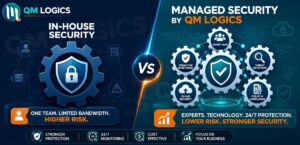
Fewer than 30% of small and mid-sized businesses handle security entirely in-house, and that’s not laziness. It’s math. A full-time security hire is expensive, hard to recruit for, and often underutilized in a company that isn’t under constant attack.
Bringing in a managed cybersecurity provider or consultancy on a project or retainer basis gets you expert coverage without the overhead of a full department. It’s the same logic as outsourcing legal work instead of hiring in-house counsel for a fifteen-person shop.
Four Questions That Actually Separate Good Firms From Bad Ones
Skip the generic “are you certified” questions. Ask these instead:
- Walk me through a report you delivered to a client my size; what actually changed?
- What happens if a breach hits mid-contract? Is that covered or billed separately?
- How do you store our data during the engagement itself?
- Who on your team actually does the technical work versus who’s just selling it?
Watch how quickly they answer the last one. That tells you a lot.
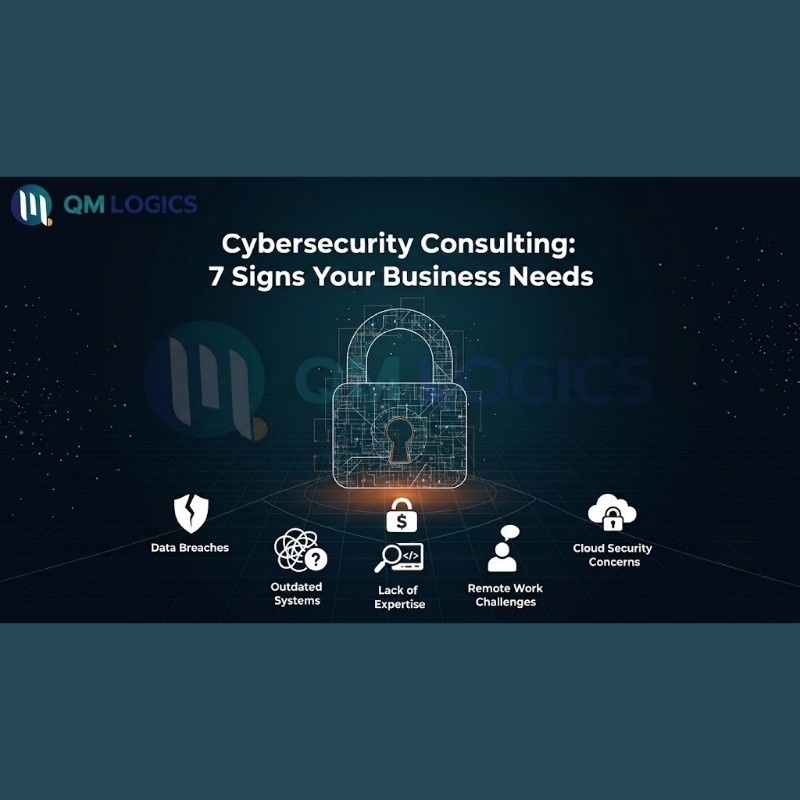
7 Signs You Needed This Six Months Ago
I built a rough scoring habit for clients who ask, “Do I actually need this or am I overreacting?” Score one point for each that applies:
- No formal risk assessment has ever been done.
- Passwords get shared over chat, email, or sticky notes.
- Nobody could tell you, off the top of their head, where customer data physically lives.
- There’s no written plan for what happens the first hour after a breach.
- Your industry has compliance rules you’re assuming, not confirming.
- You added cloud tools or remote staff faster than you updated security policy.
- A competitor or vendor you work with got hit recently.
Two points or higher means stop assuming and start checking. I’ve seen businesses sit at four or five points for years and only act after something already went wrong.
Two Real Situations That Show Why This Matters
A regional accounting firm I’m familiar with put off a security review for years, assuming their size made them invisible to attackers. That assumption is backwards now. Roughly 43% of all cyberattacks in 2025 hit small businesses specifically, according to research compiled by BD Emerson, precisely because smaller teams tend to have thinner defenses. Firms holding financial records are attractive exactly because they’re easier to crack than a bank.
The fix there wasn’t complicated. Multi-factor authentication, tighter access controls, done within a few weeks. What’s expensive isn’t the fix. It’s the delay before someone finally looks.

Downtime tells a similar story, just from a different angle. NinjaOne’s research puts the cost of attack-related downtime at close to $53,000 per hour for an affected business, based on VikingCloud’s findings referenced in their SMB cybersecurity report. For a software company mid-launch, a few hours offline at the wrong moment can undo months of client goodwill in an afternoon.
This is the exact kind of risk we build around at QM Logics when clients bring us in for digital transformation work; security gets built into the architecture rather than added on after launch as an afterthought.
Conclusion
Nobody wants to spend money proving their business is fine. But that’s exactly what this is: proof, or a fixable list of what isn’t fine yet. I’d rather a client spend a few thousand dollars finding out now than find out the hard way during a Monday morning phone call from a customer whose data just got leaked.
If you’re not sure where you’d land on that seven-point list above, start with a basic risk assessment rather than a full engagement. It’s the cheapest way to get a real answer. Our team at QM Logics folds this thinking directly into the custom software development process we run for clients, and if you want a second opinion on where you currently stand, you can reach out here.
Frequently Asked Questions
Is cybersecurity consulting worth it for a small business?
Usually yes, and not because of fear marketing. Prevention costs a fraction of what a single breach costs once you factor in downtime, legal exposure, and the customers who quietly leave afterward.
How is this different from just hiring an IT company?
IT keeps systems running. Security consulting tries to break them on purpose, safely, so you find the weak spot before someone with bad intentions does.
How often should a business actually get reassessed?
Once a year at minimum, and immediately after any major change, new cloud tool, new remote hires, new vendor integration. Regulated industries usually need it more often than that.
Does company size actually matter for needing this?
Less than people assume. Any business holding customer data, payment info, or proprietary code is a target. Smaller companies just tend to have fewer defenses, which makes them easier, not less likely, to get hit.
Can a consultant help with compliance specifically, or is that separate?
Most firms fold compliance review into the standard engagement. It’s usually checked against whatever applies to your industry: HIPAA, GDPR, CCPA, alongside the technical risk assessment.