 Web Development
 APP Development
 CRM Development
 Digital Transformation
 Generative AI
 QA Testing & Automation
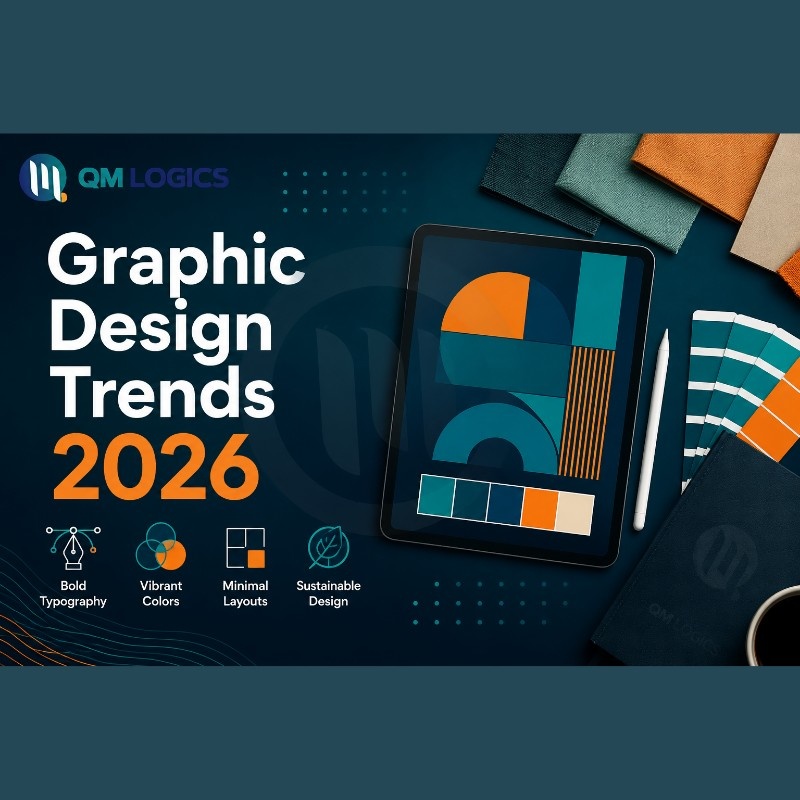
I get asked this a lot lately. What’s actually happening with graphic design trends 2026, and is any of it worth my time? Fair question. Here’s my honest answer. Brands are pulling away from that overly clean, AI-polished look that dominated the last couple of years. People got tired of perfect gradients and flawless renders showing up in every single feed. Now they notice, almost instantly, when something feels handmade. A little rough around the edges. A little real.
I’ve spent time working across software branding, retail clients, and a few service businesses, and this shift isn’t just something I read in a report. Clients are literally telling me, “Make it feel less AI”. That’s a strange sentence to hear in 2026, but it’s where we are.
So let’s get into it properly. I’ll walk through the biggest 2026 graphic design trends, what’s going on with Gen Z visuals, how graphic design firms across the US are adjusting, and where things like fine art, sports branding, and website design all fit into the bigger picture. I’ll also touch on tools, programs, and a few practical fixes for businesses working with limited budgets.
Why Graphic Design Trends 2026 Actually Matter Right Now
New trends in graphic design show up every single year. Most get forgotten by March. This year feels different, though, and I think there’s a real reason for that.
Adobe’s 2026 Creative Trends Forecast leans hard into design that connects emotionally, feels rooted in local culture, and engages people on a human level. Not flashy. Not perfect. Just real, and a bit messy in places. Adobe
Think about your own scrolling habits for a second. You probably see hundreds of brand graphics a day and remember almost none of them. If your visuals look like everyone else’s stock template, they vanish into the noise. That’s really the whole point behind these graphic design industry trends. They’re not about chasing whatever’s hot this week. They’re about not getting lost in a feed that already feels saturated.
Current trends in graphic design also reflect something bigger happening in tech. As AI tools get faster and cheaper, the things AI struggles to replicate (texture, imperfection, personality) become more valuable. That’s not me being dramatic. It’s just supply and demand for attention.
Top Graphic Design Trends 2026 You Should Actually Care About
Here’s a quick table first, then I’ll break each one down properly.
| Trend | What It Looks Like | Best For |
| Tactile Craft | Stitching, fabric textures, paper cutouts | Packaging, branding |
| Y2K / 90s Revival | Bright gradients, retro shapes, loud colors | Social media, fashion |
| Neon Trend in Graphic Design | Glowing edges, electric colors, high contrast | Gaming, events, nightlife brands |
| AI-Assisted Human Design | AI for speed, human hands for the finish | Marketing teams, agencies |
| Layered Mixed-Media | Photos plus illustration plus texture in one frame | Posters, websites, campaigns |
Tactile Craft and Hand-Made Textures
This trend is genuinely everywhere right now. Think digitally created embroidery, stitched edges, fabric textures that mimic felt or wool, and paper cutouts with that glued-edge look. It feels warm. It feels like it was touched by a real person, not generated in three seconds. VistaPrint
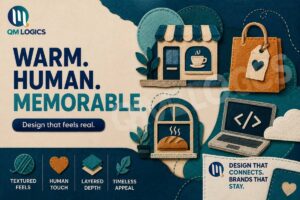
I’ve seen this work especially well for smaller brands. A local bakery, a boutique clothing line, a coffee shop trying to feel less corporate. Even a software company can borrow a softer version of this trend to take the edge off a brand that feels too sterile or too “tech.”
90s Nostalgia Meets Gen Z Graphic Design Trends
Here’s something I genuinely didn’t expect to say again, but the 90s graphic design trends are back. And honestly, Gen Z graphic design trends are driving most of it. Bright, saturated colors are making a comeback, pulled straight from Y2K(Year 2000) nostalgia and what people now call dopamine design. Figma
If your audience skews younger, this isn’t optional anymore, not really. Gen Z scrolls past clean and corporate without a second glance. They stop for loud, slightly chaotic, a bit nostalgic. It doesn’t have to take over your whole brand either. Even one campaign in this style can shift how people perceive you online.
The Neon Trend in Graphic Design
Alongside the 90s revival, there’s a parallel neon trend in graphic design making a comeback. Glowing outlines, electric pinks and greens, high contrast against dark backgrounds. It’s loud on purpose. Gaming brands, event promoters, and nightlife businesses are leaning into this hard, and it pairs surprisingly well with the layered mixed-media approach I’ll get to next.
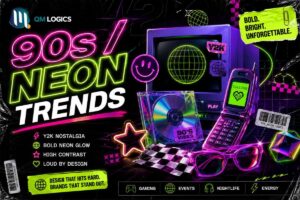
I’d be careful with this one for more conservative industries, though. A neon-heavy redesign works great for a streetwear brand. It probably doesn’t work for a law firm. Context matters here more than almost any other trend on this list.
AI-Assisted, But Still Human-Finished
Almost every designer I know uses AI now; that’s not new anymore. What’s changed is how it gets used. The smarter studios use AI for the boring first draft, the rough concept, the placeholder layout. Then a real person takes over for the finish. One design writer put it well, describing this approach as being about authorship and restraint rather than chasing endless optimization. Pinterest
This matters if you’re a business owner worried about cost versus quality. You genuinely don’t have to pick one or the other. AI speeds things up at the front end. A skilled designer makes sure it actually looks like something worth showing your customers.
Layered, Messy, Mixed-Media Looks
Flat single-layer graphics feel dated now, even a little lazy. Photography, illustration, type, and texture are getting stacked together in one composition, creating something that feels dimensional rather than flat.
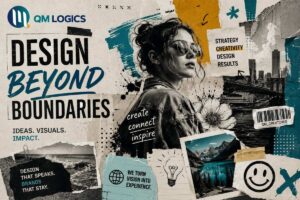
It shows up in posters, social posts, even website headers and hero banners. Honestly, this is one of the easier 2026 graphic design color trends to test without redoing your entire identity. Just layer one new element into something you’re already using and see how it lands.
How Graphic Design Services in the USA Are Adapting
Knowing the trend list is the easy part. Applying it without wrecking your existing brand identity, that’s the harder part. This is exactly where solid graphic design services in the USA, or an offshore team that genuinely understands the US market, earn their fee.
Here’s roughly how I’d approach it if it were my own brand:
- Start with social templates, not your logo
- Pick one or two trends that actually fit your audience, don’t try all five at once
- Keep your core identity steady, refresh the supporting graphics around it
- Test on a small audience segment before rolling anything out fully
Whether you go with a large graphic design company in the USA or a smaller boutique studio, the same rule applies. Trends should support your brand, not replace it overnight.
Choosing Between Big Graphic Design Firms and Freelancers
This question comes up a lot too. Larger graphic design firms tend to offer more consistency, faster turnaround, and a wider range of skills under one roof, things like product design services, branding, and web design all bundled together. Freelancers can be cheaper and more flexible, but quality varies a lot from person to person.
For ongoing work, especially if you need both graphic design websites and print materials, I usually recommend a small firm or agency over juggling multiple freelancers. It just keeps everything consistent.
What to Do When Your Photos Aren’t Great
This comes up constantly, and it’s a real practical problem. Small business, limited budget, photos that just aren’t great. Instead of waiting months for a proper photoshoot, designers now lean on texture overlays, color grading, and layered graphic elements to make average photos look intentional. This is graphic design around bad photos in practice, and honestly, knowing how to graphic design around bad photos is a skill that saves businesses real money. It pairs naturally with the tactile and mixed-media trends mentioned earlier, too.
Graphic Design vs Fine Art, and Where It All Fits
People mix these two up constantly. The fine art vs graphic design difference really comes down to intent. Fine art exists for expression, open to interpretation, with no client brief involved. Graphic design exists to solve a specific problem for a brand or a message. Different jobs entirely, even if the tools sometimes overlap.
A few places graphic design shows up that people don’t always think about:
- Sports graphic design: jerseys, fan gear, stadium branding, social content for game day
- Environmental graphic design: signage, wayfinding, branded office or retail spaces
- Graphic design in web: how visual identity actually translates into layouts, buttons, and scroll behavior on graphic design websites
If you’re working on the web side of things too, our piece on how website design impacts conversions goes deeper into that connection. And if user experience is part of your plan, why UI/UX matters for your website is worth a read as well, since website and graphic design overlap more than most people realize.
Best Graphic Design Programs for 2026
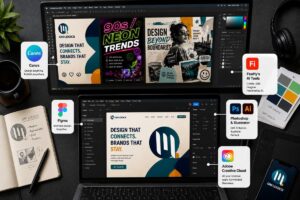
I get asked about software a lot, too. For most of these trends, the best graphic design programs are still Adobe’s Creative Cloud apps, Photoshop and Illustrator especially, now with Firefly’s AI tools built directly in. Figma remains the go-to for anything touching graphic design in web or UI work. For smaller budgets, Canva has gotten genuinely good for social templates, though it has limits once you need true custom branding.
Conclusion
Graphic design trends 2026 aren’t really about gimmicks, even if a few of them look that way at first glance. They’re a reaction to years of AI-flooded, overly perfect content flooding every platform. Tactile textures, Y2K(Year 2000), and neon energy, layered compositions, human-finished AI work. That’s the direction things are heading, at least for now.
If you’re running a US business, you don’t need to overhaul everything overnight. Pick one trend, try it on something small, and see how people respond before going further. Whether you handle it yourself or bring in a graphic design company in USA, the goal stays the same. Design that feels like it was made by a person, for actual people. You can check out more of our work over at QM Logics and can request a quote.
Frequently Asked Questions
What’s the biggest graphic design trend for 2026?
Tactile, hand-made textures combined with AI-assisted, human-finished design. That combination keeps showing up everywhere I look.
Are 90s graphic design trends really back?
Yes, and they’re not going away soon. Bright colors and retro shapes are showing up across social and web design, mostly aimed at younger audiences.
Can a small US business afford to follow graphic design trends for 2026?
Yes. Start with social graphics and marketing materials before touching your full identity. Test what works first, then expand from there.
Is AI replacing graphic designers in 2026?
Not really, at least not from what I’ve seen. AI handles speed and rough drafts. Designers handle the judgment, the texture, the small details that still feel off when AI does them alone.
What software do most designers use for these trends?
Adobe’s Creative Cloud is still the standard, with Firefly now built into tools like Photoshop. Figma covers most web and product design services work.