 Web Development
 APP Development
 CRM Development
 Digital Transformation
 Generative AI
 QA Testing & Automation
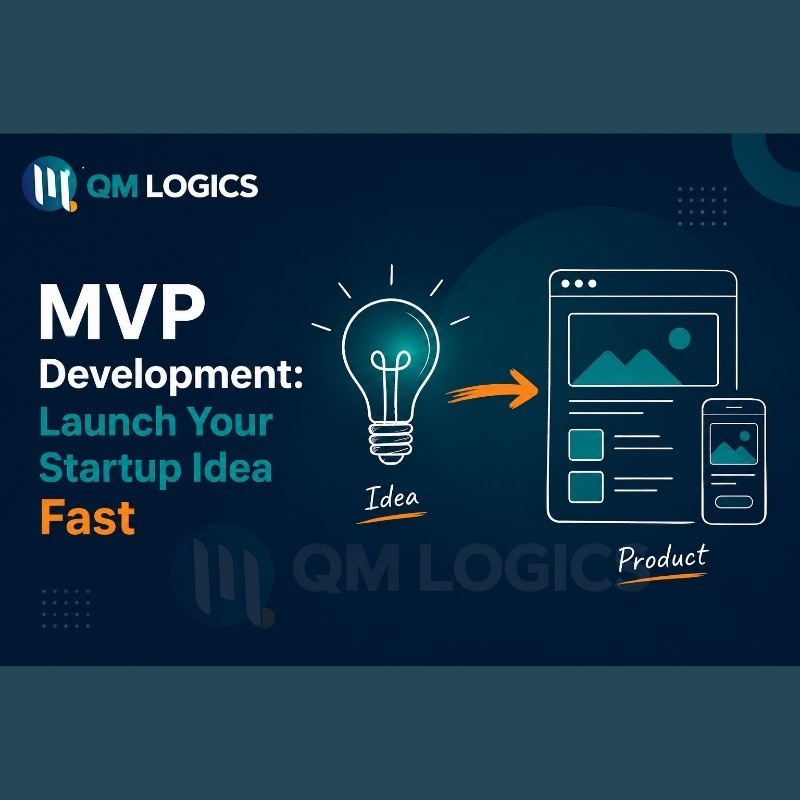
I get asked some version of the same question almost every week. Someone has an idea, maybe a sketch, maybe just a problem they keep running into, and they want to know where to start. My answer is almost always the same: build the smallest version of it first. That’s the entire premise behind MVP development, and it’s the reason so many products you use today started out looking nothing like they do now.
MVP development means building a working version of a product with just enough features to solve one real problem for real users. Not a mockup. Not a pitch deck. A product people can actually use, even if it’s rough around the edges.
If you’ve landed here searching for the “MVP meaning in software development”, “how the MVP development process actually works?”, or “how to pick the right MVP development company?”, stick around. I’ll walk through the real process, the mistakes I’ve watched sink good ideas, and a few examples that make this a lot less abstract.
What Is MVP In Software Development?
MVP in software development stands for minimum viable product. It’s a product built with only the core features needed to test whether users want it before you spend real money finding out.
Here’s the part most people miss. MVP doesn’t mean cheap or unfinished. It means focused. Airbnb didn’t launch with a booking platform. The founders rented out air mattresses in their own apartment and built a basic website around that one idea. That was the MVP. It answered one question: will strangers pay to sleep in someone else’s home? Once the answer was yes, everything else got built on top of it.
That’s the mindset behind MVP development for startups today. You’re not trying to impress anyone with a feature list. You’re trying to find out, as cheaply and quickly as possible, whether anyone actually cares about what you’re building.
MVP vs Prototype vs Full Product
People mix these three up constantly, and it costs them money when they do.
| Stage | Purpose | Real Users Involved? | What You Get |
| Prototype | Test the idea visually | No | Clickable mockup |
| MVP | Test real demand | Yes | Working product, core features only |
| Full Product | Scale and retain users | Yes | Complete platform |
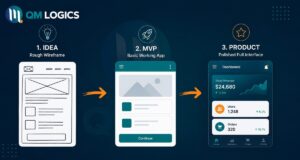
A prototype tells you if the idea makes sense on paper. An MVP tells you if people will actually use it. That difference should shape how any MVP software development project gets scoped from the first conversation, not after the budget’s already spent.
The MVP Development Process I Actually Use
Every MVP development process I run starts the same way, and it has nothing to do with code. It starts with figuring out if the problem is even worth solving.
I’ve had founders come to me ready to build, and when I ask who the product is for and what specific problem it solves, the answer is vague. That’s a red flag. We slow down right there.
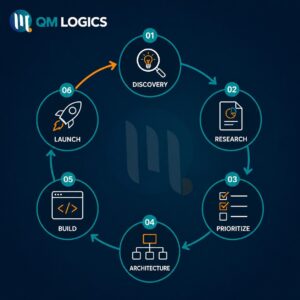
Once the problem is clear, here’s roughly how the MVP development framework I use plays out:
Discovery first. I ask what problem this solves and for whom, specifically. Vague answers mean we’re not ready to build.
Then competitor research. What already exists, and where does it fall short? This shapes the whole MVP development strategy going forward.
Feature prioritization comes next, and it’s usually the hardest part. Founders want everything in version one. I push back hard, and we narrow it down to whatever proves the core idea.
Architecture planning. We pick a stack that won’t need a full rebuild once the product grows. Skipping this step is one of the most expensive mistakes I see in custom MVP software development.
Build in short cycles. No twelve-week disappearing act followed by a big reveal. Regular check-ins, regular course corrections.
Launch small, then listen. The MVP goes out to a limited group first, and whatever they say shapes version two.
Picking The Right Features For Your MVP
Ask yourself this before anything else: if you could only ship three features, which three would actually prove your idea works? Everything outside that answer can wait.
Dropbox is the example I bring up most often here. Instead of building the full file-syncing platform, the founder made a simple explainer video showing how it would work. That video alone generated a waitlist in the tens of thousands, before a single feature was fully built. If you’re starting MVP app development right now, that’s the lesson. Prove it works before you make it pretty.
MVP Development For Startups And Enterprises Isn’t The Same Game
Startups and enterprises both need an MVP, but they’re solving for different things. A startup usually needs speed above everything else. An enterprise usually needs the new idea to play nicely with systems that already exist, plus sign-off from people who weren’t in the original brainstorm.
For a startup, MVP development services are often racing a funding timeline or a competitor. For an enterprise, MVP development consulting tends to be about testing a new product line without putting the existing business at risk.
A few things I’ve noticed hold true across most projects:
- Startups typically want an MVP in 6 to 12 weeks because investors and competitors don’t wait
- Enterprises usually accept a longer build in exchange for compliance and integration done right
- Startups lean into risk for speed
- Enterprises lean into stability, even if it costs them a few extra weeks
Healthtech Startup MVP Development Comes With Its Own Rules
Healthtech is one of the trickier spaces to build in, mostly because of data privacy and clinical accuracy expectations that don’t exist in most other industries. I worked on a project where the client wanted a full patient intake and scheduling system. We scoped it down to one piece: digital intake forms that synced with the clinic’s existing scheduler.
That single workflow let the client test real adoption with actual clinics in a matter of weeks, not months. It also kept us from building a heavy, compliance-loaded platform before knowing whether clinics would even bother switching from their current process.
AI MVP Development And SaaS MVP Development
AI MVP development is probably the request I get most often right now, and it makes sense. Everyone wants to know if an AI feature is actually worth building before committing to a full model pipeline. Most of the time, the smarter move is wrapping an existing AI API around a narrow use case instead of training something custom from scratch.
I recently built an early version of an AI support triage tool this way. Rather than training a model, we plugged an existing API into a simple interface and tested it against three weeks of real support tickets. That saved months of dev time and gave the client actual usage data before spending another dollar. I went deeper into this shift in my piece on how AI is reshaping SaaS development.
What Is MVP In App Development, Especially For SaaS
For SaaS products specifically, the MVP usually needs to prove one workflow matters, not showcase a full dashboard. Nobody needs user roles, billing tiers, and analytics on day one. They need proof that one thing saves people enough time or money that they’d actually pay for it.
This comes up a lot when clients ask whether to build supporting tools like a CRM during the MVP phase or just buy something off the shelf. I broke that decision down in my article on custom CRM development and when to build versus buy, which is one of the most common forks in the road during early saas mvp development.
How To Actually Hire The Right MVP Development Company
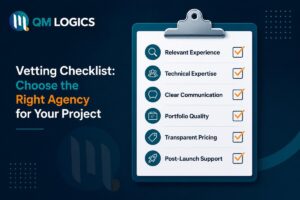
Here’s a question I tell every founder to ask an MVP development company before signing anything: How would you cut scope down, not expand it? Any agency that’s eager to add features before understanding your goal is optimizing for a bigger invoice, not your outcome.
I’ll let a few clients speak to this instead of me. A client, based in Egypt, told us the professionalism and dedication our team brought made the entire collaboration genuinely enjoyable, and he’s continued working with us since. One more, in London, came to us stuck on a Laravel issue his in-house developer couldn’t crack, and our team resolved it fast enough that he now sends other founders our way. Client, based in the Netherlands, specifically pointed out how quickly we delivered without cutting corners on communication or quality.
“The goal of an MVP isn’t to build less. It’s to learn faster.” That’s the principle behind every MVP development service I take on, whether it’s a full mvp software development company partnership or just consulting support for a team that already has developers in house.
What To Look For In An MVP Software Development Agency
A good MVP software development agency should ask you more questions than they answer on the first call. If they jump straight to a proposal without understanding your user, walk away.
A short checklist before you hire MVP developers:
- Ask to see MVPs they’ve shipped, not just finished products
- Ask how they handle scope creep mid-project
- Ask what stack they’d recommend and why it fits where you’re headed
- Ask how they’d measure whether the MVP actually worked after launch
- Confirm they’ll still be around if the product needs to scale past launch
If you want to see how we approach this, take a look at our custom software development, app development, and generative AI work, or browse our full services page to see where MVP work fits into the bigger picture.
Conclusion
MVP development isn’t about thinking small. It’s about not wasting six months building what you assume people want, when you could spend six weeks finding out what they actually want. I’ve watched this save founders from painful pivots, and I’ve watched enterprises use the same approach to test new ideas without putting their core business on the line.
If you’re ready to validate your idea properly, start with a clear problem statement and a short list of must-have features. Then find a team that pushes back on your scope instead of padding it. You can reach out through our request a quote page to talk through what you’re building.
Frequently Asked Questions
What is MVP in software development?
It’s the minimum viable product, a working version of software built with only the features needed to find out if users actually want it.
What is MVP in web development?
Same core idea applied to a website or web app. You launch with one core function working well instead of a full site with every page and feature built out.
How long does MVP development take?
Most projects land somewhere between 6 and 16 weeks. Simple, single-workflow builds land on the shorter end. Enterprise projects with integrations take longer.
Do I need funding before I start?
No, and honestly it’s usually the other way around. Founders build an MVP specifically to show investors real traction instead of just a pitch.
Can a well-built MVP still fail?
Yes. CB Insights has found that building something the market simply doesn’t need is the top reason startups fail, which is exactly the risk an MVP is meant to catch early.
Should I build MVP myself or hire someone?
Depends on your background. Technical founders sometimes build version one themselves. Most people benefit from an experienced MVP development company that’s already made the expensive mistakes on someone else’s dime.