 Web Development
 APP Development
 CRM Development
 Digital Transformation
 Generative AI
 QA Testing & Automation
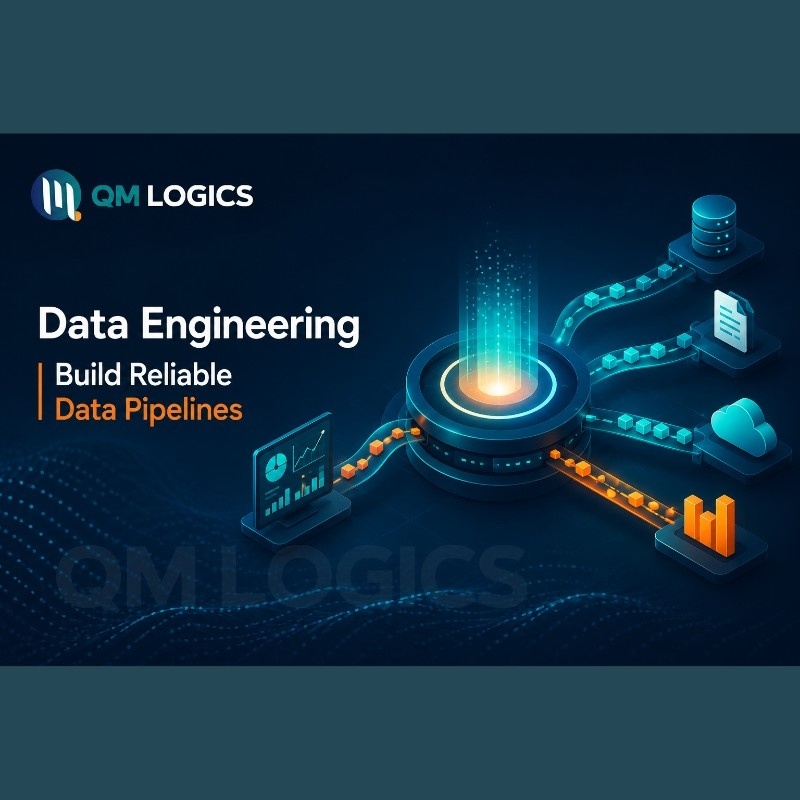
A client of mine once pulled up two reports for the same week and got two different revenue numbers. Nobody could explain why.
That’s usually the first sign a company needs data engineering services, not another dashboard tool. The problem was never the reporting software. Nobody had built a system connecting the data in the first place.
Data engineering services cover the design and upkeep of the pipelines, storage, and workflows that move raw information into a place your team can actually trust. Get the data clean, get it connected, and get it somewhere people can use it without guessing.
We(QM Logics) built this kind of infrastructure for businesses across the USA, from retail brands to healthcare providers drowning in intake forms. The pattern repeats every time. Once the underlying data engineering work is done properly, everything downstream, from AI models to weekly reports, finally works the way it was supposed to.
What Is Data Engineering, Really
Ask ten people what data engineering is, and you’ll get ten vague answers about “big data.” None of them explain what the job actually involves.
Data engineering is the practice of building the plumbing that carries information from a source, like your CRM or website, into a warehouse where it’s cleaned and ready to query.
Data science and analysis get the attention because they produce the charts people see. But none of that works without the engineering layer underneath. Skip that step, and your analysts are just polishing broken numbers.
What Is a Data Pipeline
A data pipeline automates the movement of data from point A to point B, usually cleaning or reshaping it along the way. Think of it as a factory conveyor belt. Raw material goes in one end, something usable comes out the other, and nobody carries it by hand.
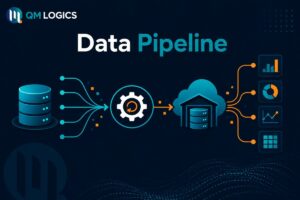
Without one, teams end up exporting spreadsheets manually every Monday. I’ve watched employees burn six hours a week on exports that a proper pipeline handles in under ten minutes, unattended.
What Is a Data Lake
A data lake stores raw data in its original form, structured or not, until someone needs it. It can hold customer support transcripts, product images, and sales records side by side, without forcing everything into rigid rows and columns.
Most data engineering service providers now combine lakes and warehouses into a single setup called a lakehouse. According to Folio3’s 2026 market research, over half of data teams already run on this hybrid model, mainly to avoid duplicating storage costs.
The Data Engineering Roadmap I Actually Follow With Clients
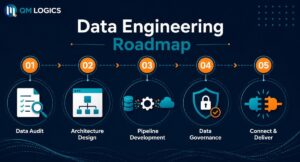
Every failed project I’ve seen skipped a step somewhere in this sequence. A solid data engineering roadmap isn’t optional structure. It’s what separates a system people trust from one they quietly stop using.
- Audit everything. I map every place data currently lives, spreadsheets included, no matter how messy.
- Design the architecture. Warehouse, lake, or hybrid, depending on how much data you actually generate.
- Build the pipelines. The automated part that keeps data flowing without daily manual work.
- Set up governance. Access rules and quality checks, because a fast pipeline feeding bad data is worse than no pipeline.
- Connect it to the tools you use. Dashboards, AI models, automation, whatever your team actually needs, similar to how we handle digital transformation projects here at QM Logics.
How Long Does This Actually Take
Depends entirely on how messy your current setup is.
- A single-source pipeline can be running in a couple of weeks.
- A full lakehouse migration with built-in governance usually takes a quarter of a year.
Anyone promising a company-wide overhaul in five days is cutting corners somewhere, probably in governance.
Data Integration Engineering Services vs Just Buying More Software
A mistake I see constantly: businesses buy another SaaS tool hoping it’ll magically talk to their other systems. It won’t, not without someone building the connection.
That connection work is what data integration engineering services actually cover, and it’s a different skill set than general IT support.
- Basic IT keeps your laptops running and your network up.
- Integration engineering makes your CRM, inventory, and finance software exchange data automatically instead of living as separate islands.
If your team still copies numbers from one tool into another by hand, that’s the gap.
Common Data Engineering Mistakes That Quietly Sink Projects
I’ve walked into plenty of “finished” data projects that were actually half built. A few mistakes show up again and again.
- Treating governance as an afterthought. Teams rush dashboards live, then realize months later that anyone in the company can access sensitive records with no audit trail.
- Copying a competitor’s stack. A five-person startup doesn’t need the same lakehouse architecture as a company processing millions of transactions a day.
- Skipping documentation. A pipeline with no documentation becomes a black box the moment its builder leaves. I always hand clients a plain explanation of how their pipeline works, not just the technical build.
Data Engineering Tools Worth Your Attention Right Now
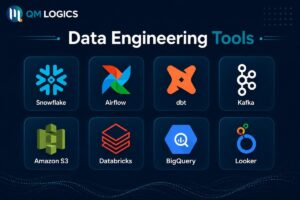
Tool choice should follow your data volume and budget, not whatever’s trending on LinkedIn.
| Category | Common Tools | Best For |
| Cloud Warehousing | Snowflake, BigQuery, Databricks | Scalable storage and analytics |
| Pipeline Orchestration | Apache Airflow, Prefect | Automating scheduled workflows |
| Transformation | dbt, Spark | Cleaning raw data into usable shape |
| Streaming | Kafka, Kinesis | Real time updates instead of daily batches |
Streaming is worth watching closely. Customers expect instant personalization now, and batch processing that updates once a day can’t keep up. Our software development team builds around these same tools whenever a client needs their app talking directly to live data instead of a stale export.
Data Engineering Services Examples From Real Client Work
Theory only goes so far, so here’s a real one.
A retail client had inventory sitting in one system and online orders in another, with nobody able to see both at once. Every stockout was a surprise. We built a pipeline merging both sources in real time. Stockouts dropped by more than a third within two months.
That’s what proper data engineering services do when they’re built correctly, not hypothetically.
Big Data Engineering Services in Action
A healthcare provider I worked with had patient intake forms scattered across disconnected tools, some digital, some still on paper waiting to be entered.
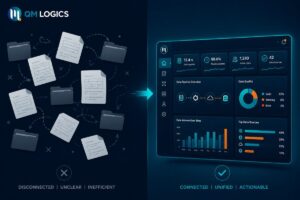
Big data engineering services consolidated everything into one governed system. Staff stopped hunting for records across three logins and started spending that time with patients instead.
Companies with mature data pipelines trust their own AI outputs far more than companies still guessing off scattered spreadsheets. That trust gap shows up directly in how fast decisions get made. If AI is on your roadmap too, it’s worth seeing how our generative AI services connect to this same foundation, since one barely works without the other.
Data Engineering Consulting Services vs Hiring In-House
The question I get asked most by founders scaling fast in the USA.
Hiring a full-time data engineer makes sense once your data volume justifies a dedicated salary. Most growing businesses aren’t there yet. Data engineering consulting services let you get the architecture built correctly without carrying that headcount before you need it.
When comparing data engineering service providers, ask these three things:
- How do they handle governance, not just pipeline building?
- Can they show real architecture decisions from past projects?
- Have they connected pipelines to AI tools, not just BI dashboards?
A provider who only shows you pretty charts is skipping the part of the job that actually matters. We break down our own process on our services page, and our digital transformation strategy guide covers the planning side in more depth. If your data plans eventually plug into a product rather than just internal reporting, our piece on AI reshaping SaaS development is worth a read too.
Conclusion
If your reports still disagree with each other, or your team is still exporting spreadsheets by hand, that’s not a reporting problem. It’s a data engineering problem, and it’s fixable faster than most people assume once the right architecture is in place.
Reach out through our contact page if you want to walk through what that looks like for your setup. And if you’re curious how this space keeps evolving for AI readiness, Google’s own documentation on AI-friendly content structure is worth a look too.
Frequently Asked Questions
What is data engineering in simple terms?
Building systems that collect, clean, and organize data so it’s trustworthy when someone needs it for a decision.
Do small businesses need data engineering services?
Often earlier than expected. Once you’re pulling data from more than two or three tools, manual processes stop scaling fast.
How is data engineering different from data science?
Engineering builds the infrastructure. Science uses that infrastructure to build predictions. One can’t function without the other already in place.
Which industries rely on data engineering services the most?
Financial services, healthcare, retail, and telecom lead adoption, mostly due to transaction volume and compliance pressure.
Can data engineering services support AI projects?
Yes, and this is becoming the main reason companies invest in them now. AI is only as reliable as the data feeding it. Recent market analysis puts the global data engineering services market past 100 billion dollars in 2026.